Lent and Ramadan - a Christian Workplace Group response
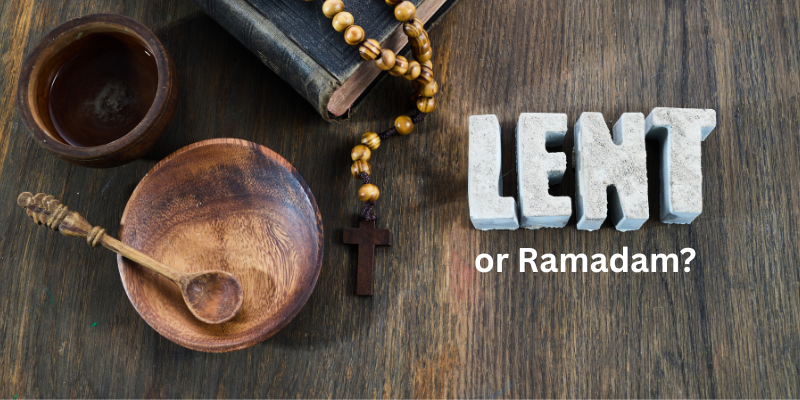
There is a lot of talk in workplaces at the moment around fasting and prayer as two world religions kick off their mighty fasts, Lent and Ramadan, on the same day this year, Tuesday 17th February.
This is a great opportunity for Christian Workplace Groups, especially those who are part of their organisation's multi/interfaith forum, to share what Lent is and why some Christians observe Lent.
What is Lent, and is it in the Bible?
Lent is a period of about 40 days observed by many Christians, especially in Western churches like Roman Catholics, Eastern Orthodox, Anglicans, and some Methodists/Protestants denominations. It’s a time of fasting, prayer, reflection, and repentance, leading up to Easter. It commemorates the 40 days Jesus spent fasting in the desert, as mentioned in the New Testament's Gospels, as in Matthew; chapter 4.
However, the specific observance of Lent, as a formal church season, is not directly mentioned in the Bible, which is why many evangelical, Baptists, and non-denominational churches do not formally observe it. The practice developed later in the history of the Christian church as a way to prepare spiritually for Easter. So, while the idea of fasting and preparation is biblical, the formal observance of Lent as we know it today developed over time through church tradition.
What are the differences between Lent and Ramadan?
There are four comparisons and contrasts between Lent and Ramadan:
First, the timing:
Lent is observed by many but not all Christians; and lasts about 40 days leading up to Easter.
Ramadan is observed by all Muslims of all sects and lasts for about 29 to 30 days, based on the lunar calendar.
Second, the purpose:
Lent is a time of fasting, prayer, and repentance, commemorating Jesus’ 40 days of fasting in the desert. It’s a period of spiritual preparation for Easter. Ramadan is a month of fasting, prayer, and reflection, commemorating the revelation of the Quran to the Prophet Muhammad.
Third, the fasting:
Christians observing Lent fast partially or give up certain foods or habits, especially on certain days.
Muslims observing Ramadan fast from dawn to sunset every day, abstaining from food, drink, and other physical needs.
Fourth, the end of the period:
Lent concludes with Easter, joyfully celebrating the resurrection of Jesus Christ, the Messiah.
Ramadan ends with Eid al-Fitr, a joyful celebration marking the breaking of the fast.
In summary, both Lent and Ramadan are seasons of prayer, fasting and spiritual reflection, but they come from different religious traditions and have unique practices and meanings.
There are many helpful resources for how to make the most of Lent and be refreshed by Jesus during this season:
-
The YouVersion app offers different ways to practice Lent, including a 40-day Bible reading plan
-
Sign up to Living Water : a seven-week Lent devotional designed by TearFund to help you draw closer to Jesus, the giver of life. In a season that invites us to pause, reflect and return to God, these weekly devotionals offer space to rest in his presence, hear his voice and be renewed by the living water he freely gives us.
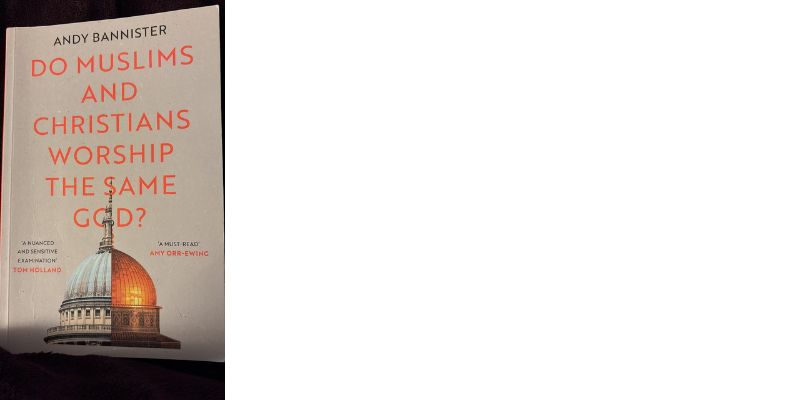
If you would like to learn more about the differences between Christianity and Islam, Transform Work would recommend researching this subject for yourselves, but if you don't have time, this short video by Dr Andy Bannister from Solas gives a helpful explanation. We would also recommend his book, "Do Muslims and Christians worship the same God?"
You can buy Andy's book, "Do Christians and Muslims worship the same God?", here.
Below are more articles about multi / inter faith in the workplace
| Thames Water recognise the benefits of providing facilities for Christians and followers of other religions who work for the company, and are providing 'faith rooms' at various locations in the workplace |
| Multi faith forums and faith networks can provide the ideal opportunity to create a Christian group. |
| Do let us know if you have any other questions to add to this list |
| Multi faith forums - Obstacle or Opportunity? |
| The challenge comes with organisations choosing to recognise a Multi-Faith group rather than specific faith groups... |
| Why would you not want to get involved and make new friends with people of other faiths and non. Take the opportunity to share the good news that Jesus Loves everyone so much that he died for us so we can live eternally. It's amazing. |
| At Transform Work we get asked, "why do you encourage Christians to engage in Interfaith Week?" |
| Building a Christian Workplace Group: Should People from Other Faiths be Part of your Christian Workplace Group? |